Mental Health
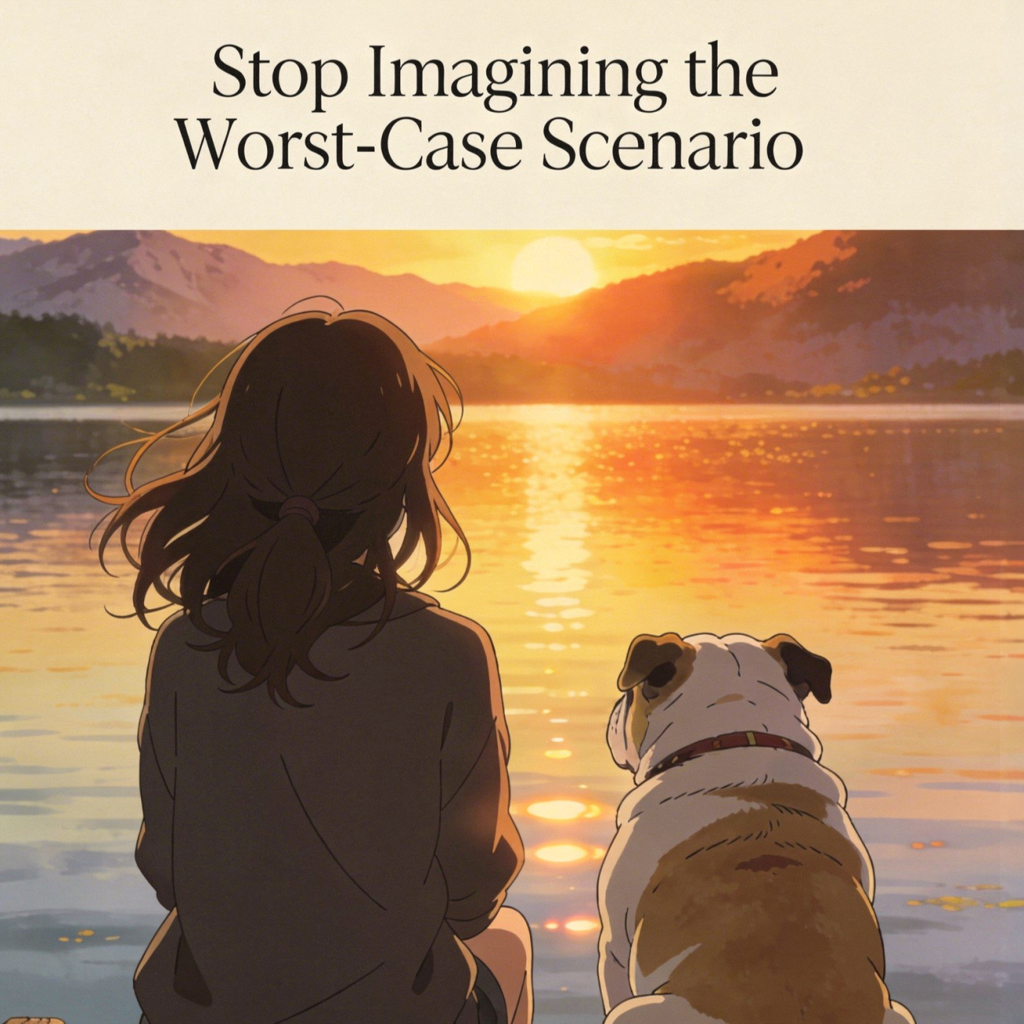
Stop Imagining the Worst-Case Scenario
Buy on Gumroad — $3.90 →38 pages · 35 min · Instant download
Stop Imagining the Worst-Case Scenario
Question the prediction before you react to it as if it's already real.
Instant download · PDF + EPUB · Yours forever
Less than a coffee. No subscription.
Someone takes a while to reply and your mind has already written the ending. A minor symptom becomes a serious diagnosis. One mistake at work becomes proof that everything is falling apart. Your brain isn't broken — it's a threat-detection system that prefers false alarms over missed dangers. The DCA Method gives you three steps to interrupt catastrophic thinking at the exact moment the prediction starts feeling like a fact.
What's inside
- Why catastrophizing is a safety system misfiring — not irrationality — and why forced optimism makes it worse
- The DCA Method: Detect the prediction, Challenge it with real evidence, Anchor in present facts
- Techniques for five situations: an unanswered message, a physical symptom, a work mistake, a relationship that feels different, and before something important
- Four habits that lower the catastrophizing baseline: the three scenarios, the reality anchor, the worry window, and the information limit
Who this is for
People whose mind jumps to the worst possible outcome before there is any evidence it will happen
Anyone who needs reassurance to feel okay — but the relief only lasts a short while before the cycle restarts
People who spend more mental energy on failure scenarios than on actual preparation for important events
What readers say
★★★★★
"Practical in a way that most anxiety books aren't. The DCA Method gave me something to actually do when my brain starts catastrophizing, not just a breathing exercise."
— Robert F., Financial Analyst, New York
★★★★★
"The section on unanswered messages was written for me specifically. Read it three times."
— Isabelle C., Freelance Writer, Paris